A garage door that suddenly stops working is one of the most common calls we get in Riverside, and the good news is that most causes are easy to identify once you know what to look for. Some fixes take two minutes. Others are dangerous to attempt yourself. Use the list below to get a quick read on what is likely going on, then read the matching section for a full explanation.
Quick Diagnosis: Match Your Symptom to the Likely Cause
- Door starts closing, then reverses before it hits the floor — likely a dirty or misaligned safety sensor, or a wrong limit setting. DIY safe to check. Related: Garage Door Openers.
- Opener light blinks several times, door will not move — a sensor or opener fault code. DIY safe to check first. Related: Garage Door Openers.
- Door will not open at all, no sound from opener — dead remote battery, tripped breaker, or manual lock engaged. DIY safe. Related: Emergency Repair.
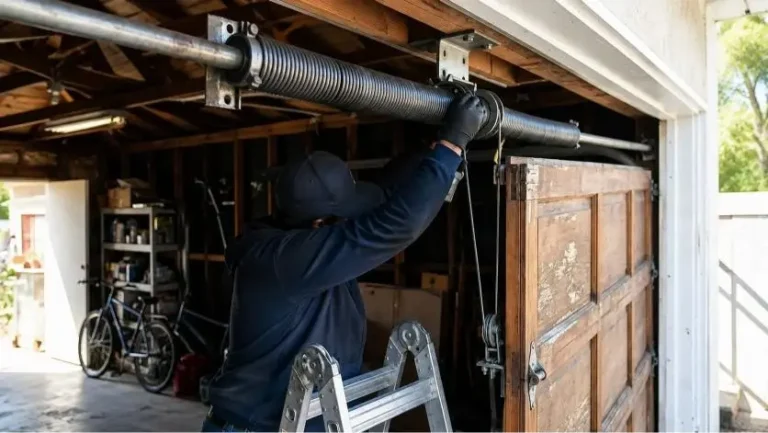
- Loud bang, then the door will not move and feels heavy — a broken torsion or extension spring. Not DIY safe, call a professional. Related: Broken Springs Repair.
- Door hangs crooked or jerks while moving — a snapped or frayed cable, or a worn roller. Not DIY safe, call a professional. Related: Emergency Repair.
- Door drags, sticks, or will not slide smoothly — a bent or obstructed track. Sometimes DIY safe depending on severity. Related: Emergency Repair.
- Gap or draft along the bottom of a closed door — worn weatherstripping. DIY safe. Related: Garage Door Tune Up.
The Opener Light Is Blinking and the Door Won't Close
If you press the button and the door will not close, but the opener light on the ceiling unit blinks several times instead, your opener is telling you something specific. Most openers use a blink pattern to flag a safety sensor problem, and this is one of the most common reasons a door refuses to close even though everything else seems fine.
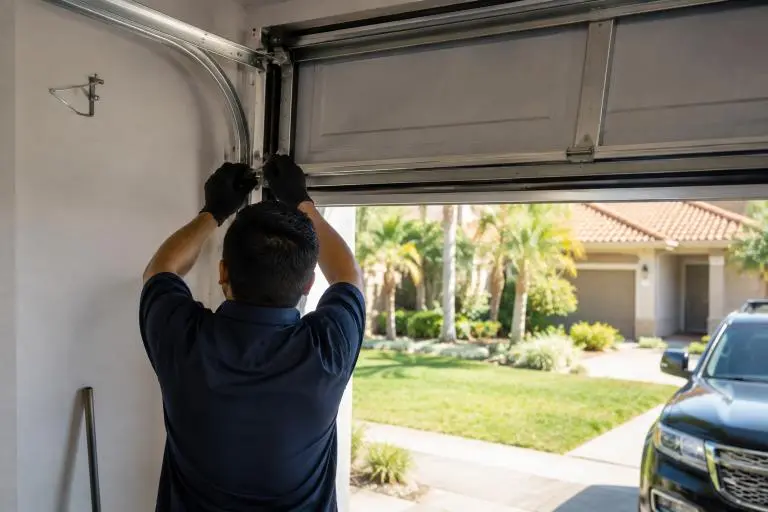
Start by looking at the two small sensor units mounted near the bottom of each track, usually about six inches off the ground. If either lens is dusty, covered in cobwebs, or knocked slightly out of alignment, the opener will not let the door close, since this is a built in safety feature that prevents the door from closing on something in its path. Wipe both lenses with a soft cloth and make sure both sensors are pointed directly at each other. A small nudge is sometimes all it takes to fix the alignment.
If the lenses are clean and aligned but the light is still blinking, the issue may be a loose wire at one of the sensors or a fault inside the opener itself, and that is a good time to call a technician rather than keep guessing.
The Door Starts to Close, Then Reverses Right Before It Hits the Floor
This is a different symptom from a door that will not close at all, and it usually gets misdiagnosed. Many homeowners assume a reversing door means a spring problem, but in most cases the cause is much simpler.
Dirty or Misaligned Safety Sensors
The same photo eye sensors covered above are the most common reason a door reverses just before closing. Even a sensor that is only slightly out of alignment, or one that has direct sunlight hitting it at a certain time of day, can cause the opener to think something is in the doorway and reverse the door as a safety response.
Incorrect Limit Settings
Every opener has a limit setting that tells it exactly how far down to travel before stopping. If this setting has drifted, often after a power outage or an opener reset, the door may hit the floor and immediately reverse because the opener has not been told the door is actually closed. This is usually a quick adjustment for a technician, but adjusting it incorrectly yourself can cause the door to close with too much force, so we recommend having it checked rather than guessing at the dial.
The Door Won't Open at All
When the door will not move in either direction and the opener seems completely unresponsive, work through the simple causes first before assuming something is broken.
Dead Remote Battery or Lost Sync
This sounds obvious, but it is genuinely the most common reason for a garage door that will not respond. Try the wall mounted button inside the garage. If the door opens from the wall button but not the remote, the fix is almost always a new battery or reprogramming the remote.
Tripped Breaker or Unplugged Opener
Garage door openers are usually plugged into a standard outlet in the ceiling near the unit, and that outlet is often on its own breaker. Check your electrical panel for a tripped breaker, and confirm the opener’s power cord has not come loose from the outlet, which can happen more easily than people expect in a garage that sees a lot of vibration and heat.
Manual Lock or Vacation Mode Engaged
Most openers have a vacation or lock mode that disables the remote for security while you are away. If someone in the household turned this on and forgot, the door will not respond to any remote until the mode is switched off. There is also a manual lock, usually a sliding bolt near the bottom of the door, that some households use for extra security and occasionally forget to disengage.
Mechanical Failures That Stop a Garage Door Cold
These are the causes that involve the door’s physical hardware rather than the opener, and they are the ones where we strongly recommend calling a professional instead of attempting a repair yourself.
Broken Torsion or Extension Spring
If you heard a loud bang at some point, and now the door will not budge or feels extremely heavy when you try to lift it manually, a spring has almost certainly broken. Garage door springs hold an enormous amount of tension, since they are responsible for counterbalancing the full weight of the door. Read our full guide to broken spring repair for more detail on why this specific repair should never be attempted without the right training and tools.
Snapped or Frayed Lift Cable
A cable failure often shows up as a door that hangs crooked, one side lower than the other, or a door that jerks unevenly as it moves. Like springs, cables are under significant tension and are not a safe DIY repair.
Bent or Obstructed Track
Sometimes the issue is much simpler than a spring or cable. A stray toy, a bike leaning against the track, or a track that has been bumped out of alignment can all stop a door from moving smoothly. Check the tracks on both sides for anything blocking the path before assuming the problem is more serious.
Why Riverside's Heat Makes These Problems Worse
Riverside summers regularly climb past 100 degrees, and that heat has a real effect on garage door hardware. High temperatures cause metal springs to lose tension faster than they would in a milder climate, and a door that opens and closes many times a day wears its spring down even quicker. Heat can also affect the plastic housing and alignment of safety sensors, and metal tracks expand slightly in extreme heat, which can turn a track that was fine in the spring into one that binds or drags by August. Regular lubrication and an annual inspection are the most effective ways to slow this wear down before it turns into a breakdown.
Garage Door Opener Problems vs. Door Problems
It helps to know whether you are dealing with the door itself or the motor that drives it. If the door moves smoothly and quietly when you disconnect it from the opener and lift it by hand, the hardware is likely fine and the problem is in the opener, its sensors, or its settings. If the door feels heavy, uneven, or difficult to lift manually, the problem is in the door’s own hardware, such as the springs, cables, or tracks, regardless of what the opener is doing. See our opener repair and installation services if the issue points to the motor rather than the door itself.
When to Call a Professional (and When It's Genuinely Dangerous to DIY)
Cleaning a sensor, checking a breaker, or replacing a remote battery are all safe for a homeowner to handle. Springs and cables are a different category entirely. A torsion spring is wound under enough tension to cause serious injury if it releases suddenly, and the tools required to safely wind or unwind one are not something most households own or have been trained to use. If your door will not move, feels unusually heavy, or you heard a loud bang before it stopped working, treat that as a sign to call a technician rather than attempt the repair yourself. Our emergency repair service is available for exactly these situations.
Preventing These Problems With Regular Maintenance
Most of the issues covered in this guide become less frequent with routine maintenance. An annual tune up checks spring tension, inspects tracks and rollers, and tests the opener’s safety sensors before small wear turns into a breakdown. Learn what our tune up service includes if it has been a while since your door was last inspected.
How Much Will Fixing This Cost?
The cost of fixing any of these issues depends entirely on which one you are dealing with. A sensor cleaning or battery replacement costs nothing, while a spring or cable repair falls into a more specific price range. See our full breakdown of garage door repair costs in Riverside for typical pricing by service type.
Frequently Asked Questions
Why does my garage door open but won't close?
This is almost always a safety sensor or limit setting issue rather than a mechanical problem. Check that both sensors near the bottom of the track are clean, aligned, and free of obstructions first.
Why does my garage door reverse before it hits the floor?
A misaligned or dirty safety sensor is the most common cause, followed by an incorrect limit setting on the opener. This is different from a door that will not move at all, which usually points to a spring or cable issue instead.
Why is my garage door opener light blinking?
Most openers use a blinking light to signal a safety sensor problem. Clean and check the alignment of both sensors before assuming something more serious is wrong.
Can extreme heat affect my garage door?
Yes. Riverside’s summer heat can accelerate spring wear, affect sensor alignment, and cause tracks to expand slightly, which can lead to binding or dragging that was not a problem earlier in the year.
How do I know if my garage door spring is about to break?
Warning signs include a visibly stretched or gapped spring, a door that feels heavier than usual when lifted manually, or unusual noise when the door operates. A loud bang followed by a door that will not move usually means the spring has already broken.
Is it safe to fix a garage door spring myself?
No. Garage door springs are under high tension and can cause serious injury if handled without the right training and tools. This is one repair we always recommend leaving to a professional.
Get Your Garage Door Fixed Today
Most garage door problems are fixable, and many are simpler than they first appear. If you have worked through this guide and are still not sure what is wrong, or if you have identified a spring or cable issue, call (951) 430-8425 for a free estimate. We will diagnose the actual cause before recommending any repair, so you are never paying for guesswork.